Home E-Mail INEX


Welcome to INEX Incorporated


INEX specializes in the manufacture of Composite Radiant Tubes (CRTs) for use in various heat treating processes. INEX tubes consist of silicon carbide in a silicon matrix, specifically engineered for radiant tubes, and are made using our patented fabrication process. These composite tubes were first introduced in 1988 and have successfully overcome the problems incurred with conventional tubes (mullite or metal alloy) that suffer from corrosion, creep, melt through, and/or oxidation.


Composite Radiant Tube Facts

What are composite radiant tubes?

How do composite materials differ from conventional tube materials?

What advanced configurations and applications are readily available upon request?

How can composite tubes save money for heat treaters?

How much do they cost?

What Are Composite Radiant Tubes?

The composite radiant tubes (CRTs) discussed here are composed of silicon and silicon carbide.  They can be used in most atmosphere heat-treating furnaces in place of conventional metal alloy and mullite radiant tubes.  INEX has developed a patented, low-cost production technique and tested the advanced radiant-tube technology to improve the performance of indirectly heated furnaces.
During the first decade of their use nearly 9,600 straight, single-pass tubes have been installed with nearly all of them still in use.  Typical composite tube life is estimated to be at least double that of conventional metal alloy or mullite tubes in similar furnace conditions.

How Can Composite Tubes Save Money for Heat Treaters?

The primary advantage of composite radiant tubes (CRTs) is reduced furnace downtime and maintenance costs due to extended tube life, especially in a high temperature work environment.  Each time a furnace is shut down to replace metal alloy or mullite tubes, the cost of idle furnace time can amount to thousands of dollars in lost revenues. 
Productivity improvement is another significant advantage.  CRTs can be fired much hotter than other tubes, providing shorter furnace recovery and overall cycle times.  Converting your furnace from electrically heated to gas-fired can save money, due to the high utility costs of electric.
For more information on how INEX composite radiant tubes (CRTs) can save you money, please refer to our Payback Calculator.

How Much Do They Cost?

Composite radiant tubes (CRTs) cost about the same or slightly more than conventional metal tubes.  However, increased tube life, higher temperature capabilities, and reduced furnace downtime can result in large cost savings over time.

How Do Composite Materials Differ from Conventional Tube Materials?

Properly installed, composite radiant tubes (CRTs) resist failure due to creep, thermal shock, carburization (embrittlement), melt-through, and oxidation. However, all composite tubes are vulnerable to breakage if dropped or struck by heavy objects.  Tube breakage during installation and operation can be avoided through proper training of shop personnel.

Material

Thermal Shock

Service Life

Temperature

Mechanical Strength

Composite

Excellent

Excellent

<2450° F.

Good

Mullite

Poor

Fair

<2500° F.

Poor

Metal Alloy

Excellent

Fair

<2000° F.

Excellent

What Advanced Configurations and Applications are Available?

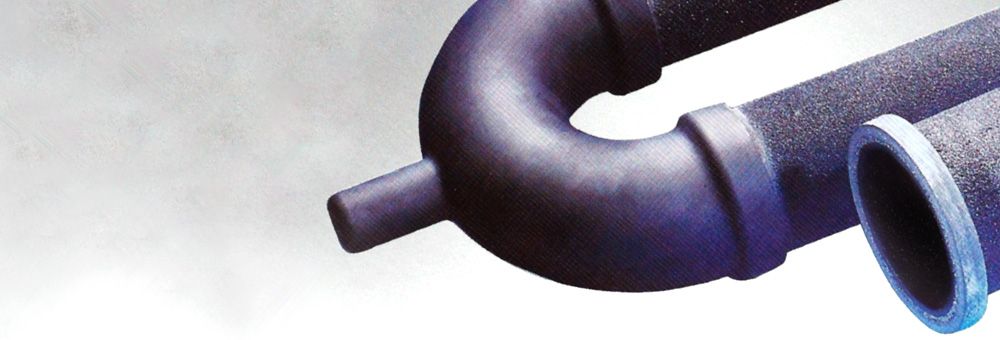
Composite radiant tubes (CRTs) can be used in all types of batch and continuous heat-treating furnaces in commercial and captive heat-treating shops.   Besides straight, single-pass tubes, single-ended recuperative tube/burner systems are also available.  U-tubes are also available to meet the needs of a significant number of heat-treating furnaces.


[Home] [Products] [Technical Data] [Sales Reps] [Contact Us] [About]


9229 Olean Road
Holland, NY 14080
Phone: (716)537-2270
Fax: (716)537-3218

Member

Copyright © 2011 INEX Incorporated
All rights reserved.

Member